Showing posts with label L&A Safety Milnerton. Show all posts

Thursday, 7 September 2017

Is it Time to Get a New Hard Hat?

From all the wear and tear of being used every day, hard hats get old over time and need to be replaced. Even if you bought your hard hat at a reliable store at the highest price, it’s always important to get a new one when the time comes.

Related image

Here’s how to tell if it is time to buy a new hard hat…

- Cracks appear in the shell
- Shiny surface appears dull or chalky
- The shell becomes brittle

While you are busy checking if your hard hat needs to be replaced, you should also check the suspension. You’ll know when you need a fresh one if…

- The suspensions become brittle
- One of more of the mounts breaks off
- The suspension will no longer hold securely to the head
- The cradling straps break or become worn

It is generally a good idea to inspect your hard hat before and after each time you use it. Although there is no set service life for hard hats, manufacturers recommend that you replace it after no more than five years.

Are you looking for a one-stop safety wear and equipment store for all your needs, including high-quality, affordable hard hats? Visit L&A Safety at their shops in Milnerton and Vredenburg or take a look at their website today!


Thursday, 2 June 2016

Future trends in PPE

Good fit, comfort and sustainability, in relation to PPE, were three areas of focus in a recently published report identifying growth areas for PPE. The report was compiled using recent global research in occupational health and safety trends.

The report focuses on two areas where effective use of PPE can minimise risks – hearing and respiratory protection.

Effectiveness of PPE is governed by the fit and one size will not fit all, when it comes to hearing and respiratory protection. Fortunately, technology has developed in response to demand and the report draws attention to innovative new fit testing techniques for hearing and respiratory protection that allow health and safety managers to confirm that the PPE is suitable for each individual. The report also looks into improvements in design, as workers demand that their respirators release hot humid air quickly to avoid build-up of unpleasant heat inside their masks.

An emerging issue it highlights is the need for end-of-service life indicators for respirators. Currently, the cartridge change schedule is based on modelling, but the report looks to future developments in end-of-service life indicators that may allow workers to tailor the cartridge change schedule to individual situations.

The report draws attention to the importance of comfort as well as the potential fit and comfort problems created by combining separate items of PPE. The report says ‘When PPE is competing for space on the same face and head, and the products are designed to be used individually, workers may be tempted to remove or improperly use one component or the other’. The report urges safety and health professionals consider all the different types of PPE being used when selecting specific models and to provide equipment that works well together, in terms of fit and comfort.

Other trends detailed in the report include: managing PPE supply and demand through a vending machine, the need for customised PPE for certain industries, and sustainability.

The advantages of using a vending machine for dispensing PPE include being able to track which employee and department received each piece of equipment. The machine also notifies the distributor when stock needs to be replenished.

It is easy to see that demand for industry-specific PPE would increase as the knowledge around what is causing health and safety problems increases. Industries cited in the report as potentially benefiting from specifically designed PPE, include mining – where hearing loss is a huge issue, food and beverage – where respirators need to protect against particulate hazards, such as flour and grain, and the military, which has to combine hearing protection with the need to be able to hear and communicate instructions. Although not mentioned in the report, increasing use and awareness of the risks of nanomaterials could also lead to more demand for specifically designed PPE.

Sustainability is a worthy inclusion in the report and also an important one. Companies are increasingly looking to become more sustainable in the way they operate and companies manufacturing and providing PPE are no exception.

The report states that currently PPE manufacturers use materials derived from fossils resources – such as polyester, polyamide, polyethylene and other polymers – and in the future PPE manufacturers may look at using more biopolymers for disposable PPE, and other natural fibres, such as hemp and linen.

The report also reminds that improvement in tracking and tracing and the addition of end-of-service indicators would help extend the life of PPE and so reduce its carbon footprint.

Thursday, 12 May 2016

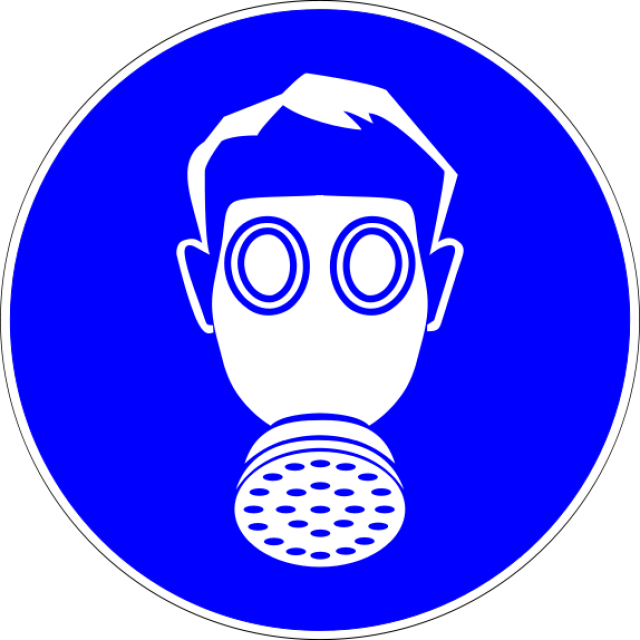
Why is Respiratory Protection important in Construction?

Respiratory protection is an important part of Personal Protective Equipment in Construction Work.
In any field of construction work it is of vital importance that all employees wear the appropriate task specific PPE, respiratory protective equipment is one of the most important pieces of PPE. Whether the employee is only using hand or power tools there is still a variety of industrial sprays, dust, fumes and particulate materials, amongst other respiratory hazards on the work site.

So it is not only necessary for the sake of health consciousness to protect yourself and your workers against respiratory hazards, but it is also an obligation due to the legal Occupational Health and Safety Act.

Looking for a wide range of safety equipment and high quality of PPE? Why not stop by one of L&A Safety's branches in Milnerton, Robertson or Vredenburg and place your order today!

There are gases, dusts, and toxic fumes present at every construction worksite that can make you very ill and some may even cause eventual death, some respiratory hazards such as carbon monoxide can make you unconscious or even kill you within minutes, other hazards such as asbestos can take years before they make you sick and can cause lung cancer.

There are methods such as engineering controls, for example good ventilation methods in an enclosed area, work practice controls such as using alternative cutting and grinding techniques, and administrative techniques where only the necessary workers who are performing a task are in the hazardous areas.

In most cases a simple dust mask will suffice but depending on the type of work and the hazardous materials other methods such as a full mask with a visor, a welding helmet, or a respirator may be required.

Respirators and respiratory protective equipment needs to be well maintained and kept clean, and any damaged equipment must be discarded of and replaced immediately.


Respiratory protection can save a life, hazards in the workplace may not seem as serious to you but regular exposure to certain materials and particles can lead to chronic illnesses and can cause drastic damage to your lungs. In some cases as with extreme hazardous materials, a few short exposures can cause death.

So remember in any workplace it is not only law but of utmost importance for your and the health and safety of your employees to always wear the task specific personal protective equipment and always to follow the Written safe Work procedures and Risk assessments step by step. Take care of your own personal safety first and then that of your fellow workers.